

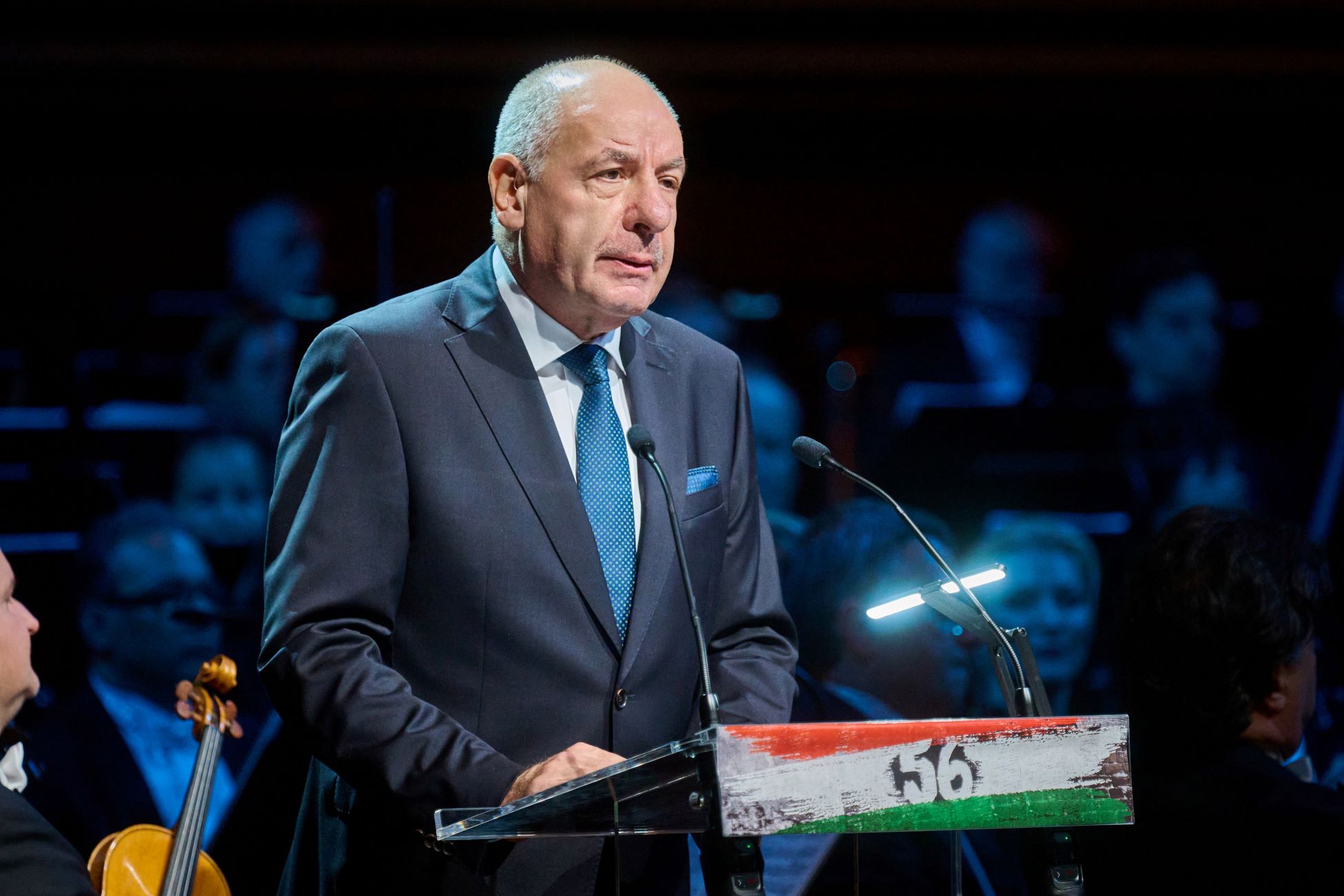
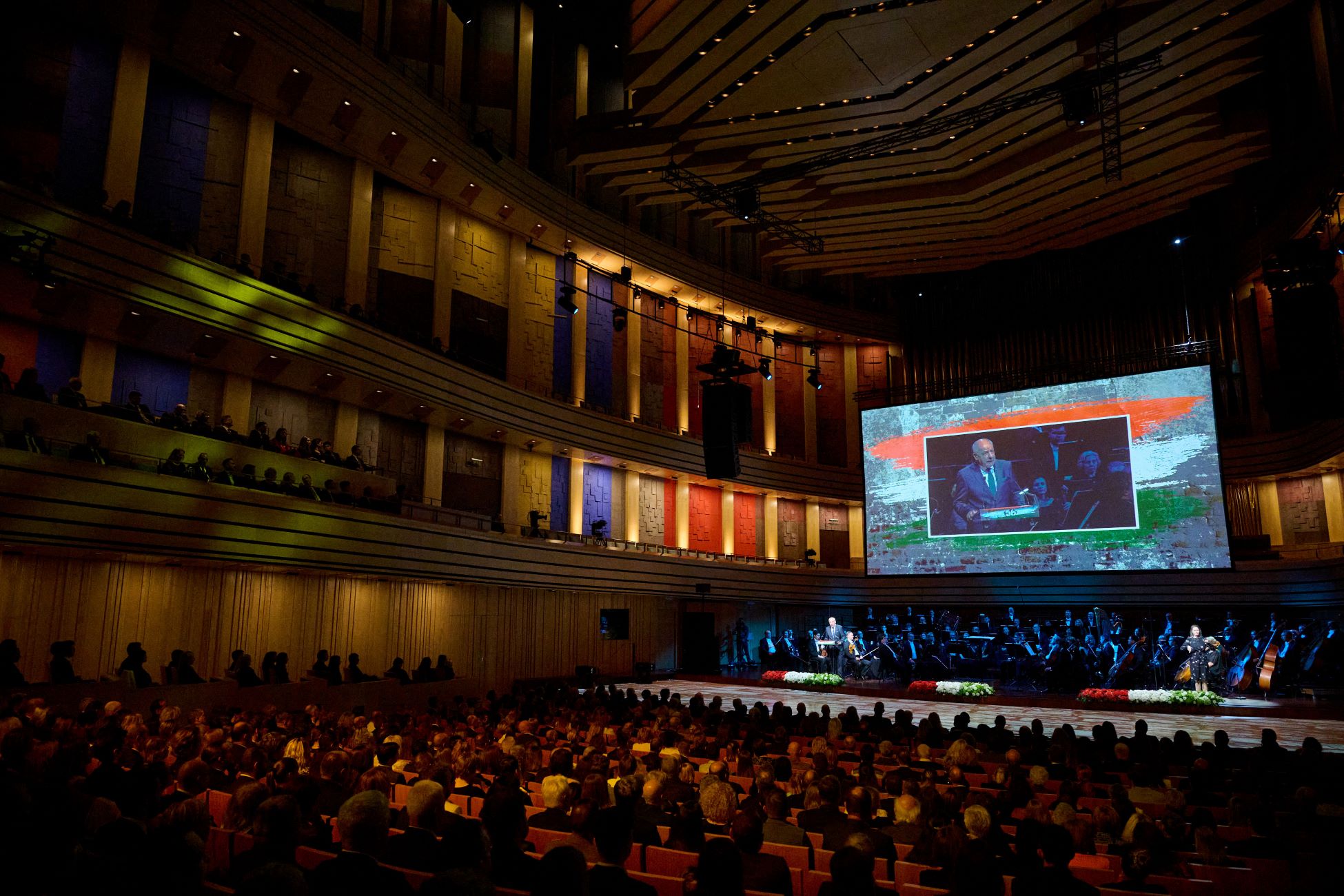
Speech by Dr. Tamás Sulyok on the anniversary of the 1956 Revolution and War of Independence
My fellow countrymen!
Hungarians celebrating in the Carpathian Basin and around the world!
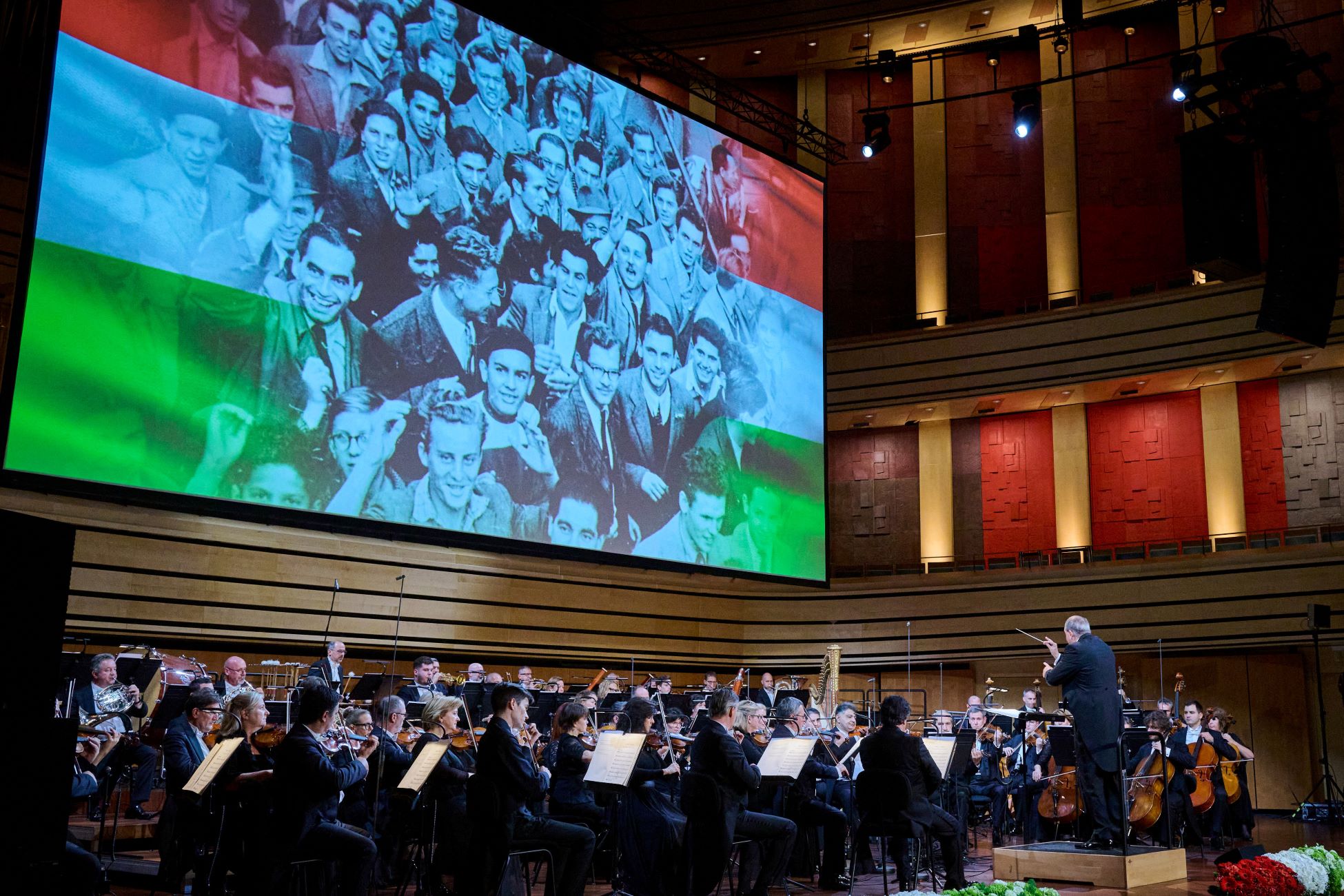
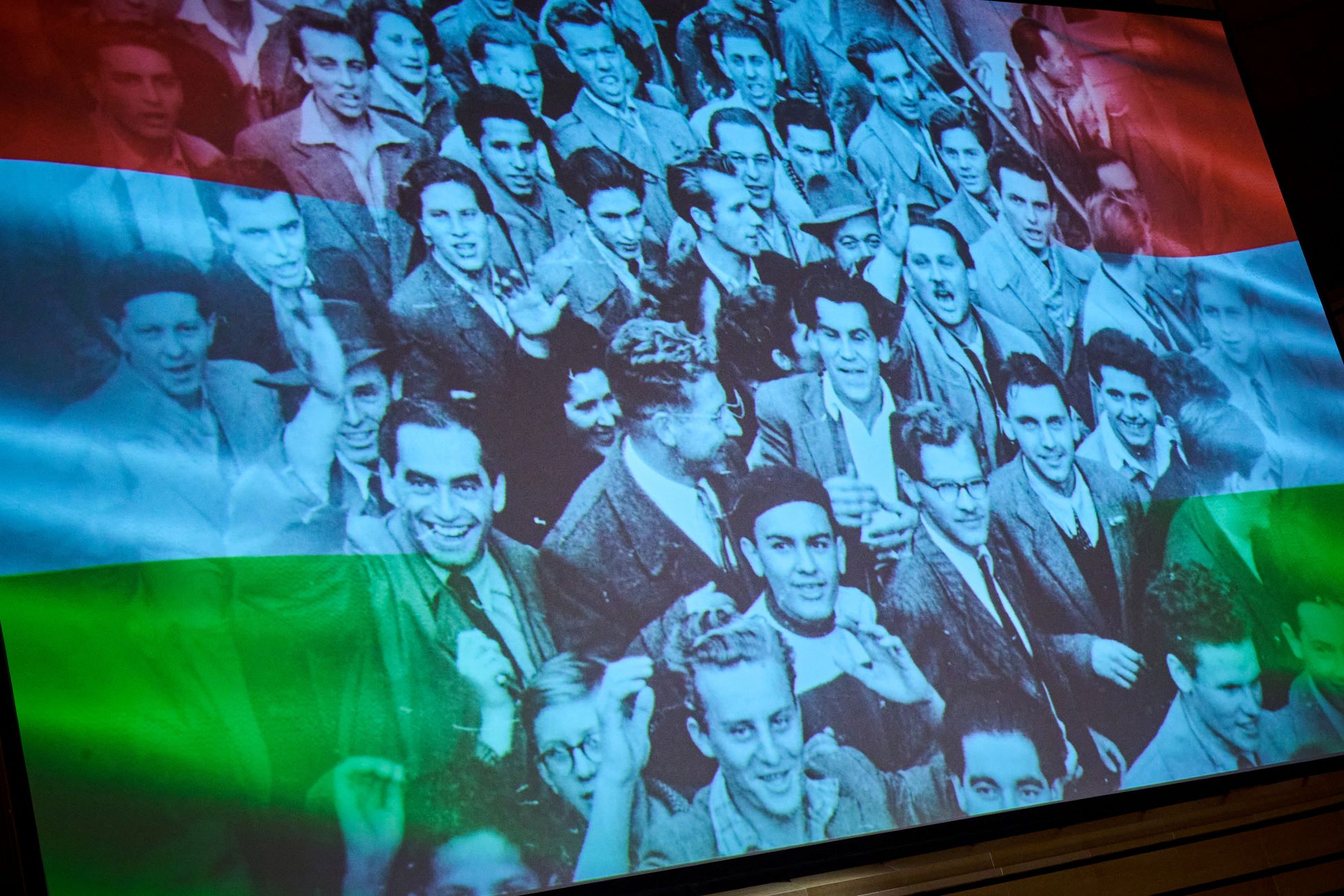
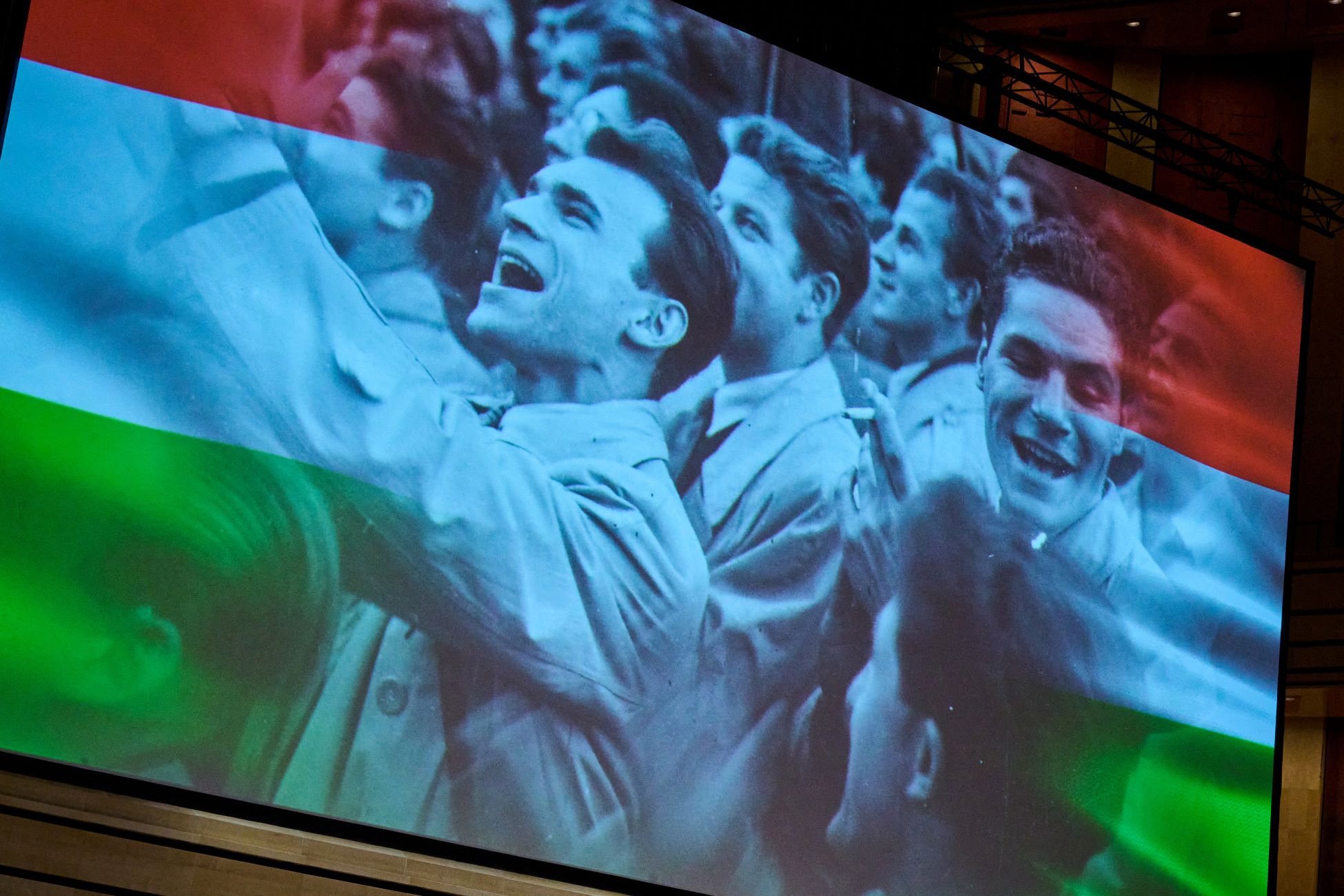
Sixty-nine years ago, people from the diverse community of Hungarians courageously took to the streets to celebrate freedom. Coming from different walks of life, social positions, and values, they set out together on the same path.
Liberation and joy were reflected on people’s faces. With determined steps they set out to reach a free homeland. Rising from their oppression, they moved toward a life of dignity. It was not their fault that a free country and a life worthy of human beings were granted to them for only a few days.
Together, however, they achieved what they had previously only dared to dream of. For two glorious weeks, Hungary was free, and its people could hold their heads high. Proudly, courageously, resolutely.
This short period of time was worth more than the ten years that preceded it or the thirty-three years that followed.
Ladies and gentlemen, the flood of Hungarians that swept through the squares and streets of Budapest, from Székesfehérvár to Zalaegerszeg, from Miskolc to Nyíregyháza, from Győr to Szeged, throughout the country, from small towns to villages, was not homogeneous. Not at all. Thousands of different dreams, different destinies and different aspirations marched along the newly liberated streets. Their individual hopes merged into a common will.
In October 1956, the desire for freedom of our compatriots, walking the streets arm in arm, stemmed from their desire to finally be themselves. They did not want to be part of an empire built with blood, an artificial ideology, a way of life alien to human nature, or uniformity. Time and again we saw that our oppressors were not satisfied with gaining control over our country and our properties; they came for our souls. The communist dictatorship equelled not only physical terror, but also intellectual and spiritual oppression, which undermined our millennial values, our Christian faith and our Hungarian national identity.
Communist dictatorship wanted to rob us of what makes us human and Hungarian. But we wanted to be ourselves. And so, despite all our internal conflicts and differences, we walked down the streets arm in arm - becoming a world-defining factor. Standing together, we dealt the first major blow to what was then the world's greatest military power. It faltered, along with its inhuman system and godless ideology, and was never able to fully recover.
Ladies and gentlemen,
for my generation, 1956 was not just one glorious period in our national history among many others, but a major turning point. Although I was born in that very year – and therefore have no memory of the events – the revolution and the struggle for freedom still had an impact on my life, as it undeniably did on the lives of almost all of us.
The entire deceitful communist system, which lingered on for a good thirty years after the War of Independence, was the stark opposite of the glorious October of 1956. And we felt this contradiction very keenly.
When the time came for change, when the country could once again be independent and free, we all recognised that this was thanks to the sacrifice and steadfastness of the heroes of 1956. Because of them, we walked proudly and with our heads held high even in the shadow of dictatorship; because of them, we held onto the hope that the godless and inhuman communism would one day come to an end. And so it did. Devictus vincit – mortus vivit! In other words, the conquered conquers – the dead lives!
Who were the people who enabled us to walk with our heads held high? From whom did we receive our freedom?
For example, from Mária Wittner, a former ward of the state; from István Angyal, who survived Auschwitz; from Lajos Gulyás, a Reformed pastor; from Árpád Brusznyai, a Christian intellectual and scientist; from Márton Rajki, a Christian socialist; from Péter Mansfeld, an unshakeable hot-headed young man; the social democrat György Gábori; the unbreakable prisoner of Recsk, Zoltán Benkő; the student leader of Gypsy origin from Szabolcs, Gyula Dandos; the smallholder Sándor Kiss; and József Perbíró, professor of law in Szeged.
They all had different views on life and on their homeland. But how could their differences of opinion divide them when they were united in their sacrifice for their one and only homeland? Because the love of different people for their homeland and their differing views on the affairs of our country cannot create more than one homeland. In this situation, the laws of mathematics do not apply. There will always be one homeland, and it will always remain one. And this one homeland is our common homeland.
That is why 23 October is a special day for all Hungarians. After all, there can be no common homeland if some are left out, no national unity if some are excluded.
And this applies to everyone. Even to those groups within the nation with whom we may strongly disagree. Not even national borders can stand in the way of this unified Hungarian perspective, let alone differences of opinion or group interests. Neither rank, nor wealth, nor political differences. Nothing.
Because, my fellow countrymen, apart from us Hungarians, no one else has an interest in keeping our nation together. Apart from us, no one else cares about preserving and enriching Hungarian culture.
No one besides us considers a free and sovereign Hungary to be in their best interest.
Those who fight and work for the Hungarian nation also fight and work for those who think differently or perhaps stand on the other side. Those who defend a sovereign Hungary defend the homeland of all Hungarians. Those who build a free Hungary build a home for all of us. And those who make sacrifices for this nation do so for all of us.
The heroes of 1956 made sacrifices for our common homeland – with honour and integrity. They adhered to their moral standards even in times marked by dishonesty. They were true people, true Hungarians.
One of them, Sándor Kiss, said the following about moral integrity: “Long years of suffering, whether endured as a political prisoner or a prisoner of war, reveal the character of an individual. It is there that humanity and morality are tested, and I think we can all agree: without morality, there can be neither true life nor genuine politics.”
Whatever values or principles our compatriots who found each other and freedom in 1956 may have had, whatever paths they may have taken, by October 1956, they had joined forces and set out on a common path. And along the road, they were alternately greeted by freely waving victory flags with deliberately cut holes in them, or by a volley of gunfire. They shared in the triumph together, and remained united even in the moment of sacrifice.
Our personal paths also often get tangled, some following one route, others another, amid the challenges of the present age.
At times like these, when we remember glorious deeds and heroes, we can truly recognize that every Hungarian path, in some way and at some time, inevitably converges with the others.
That is why opinions may clash – this is the basis of democracy – but people may not.
Even if we live differently, our lives are still shared. Even if different burdens weigh on our shoulders, our fate is still one. Even if we belong to different communities, we are still part of a shared nation. And this nation is one, indivisible and whole.
Ladies and gentlemen,
at the end of his life, Ferenc Nagy, the smallholder Prime Minister who was forced to resign by the communists, wrote the following to Gyula Illyés: "It would not be right to pass on spiritual isolation from generation to generation. Above us, the sky only clears temporarily, then storms and more storms arise again. We can only survive these if we live in a single, very close spiritual unity."
This is the spiritual unity, my fellow countrymen, which it is a sin to break and which every Hungarian has a moral duty to uphold. If I accept my Hungarian identity, then I also accept my fellow Hungarians and that we belong together. That is the only way. That is the only way it can be.
We like to think—and sometimes reproach ourselves—that there is no Hungarian national minimum. I disagree, for whenever it was needed, we have consistently recognized the bond that unites every Hungarian.
Then we joined forces, and when fate demanded it, we stood shoulder to shoulder, not just for ourselves, but for all of us.
This is what happened in October 1956. Let us live by this example in our daily lives!
Glory to the heroes! God bless our country, God bless our nation, God bless all Hungarians!
Budapest, 23 October 2025