

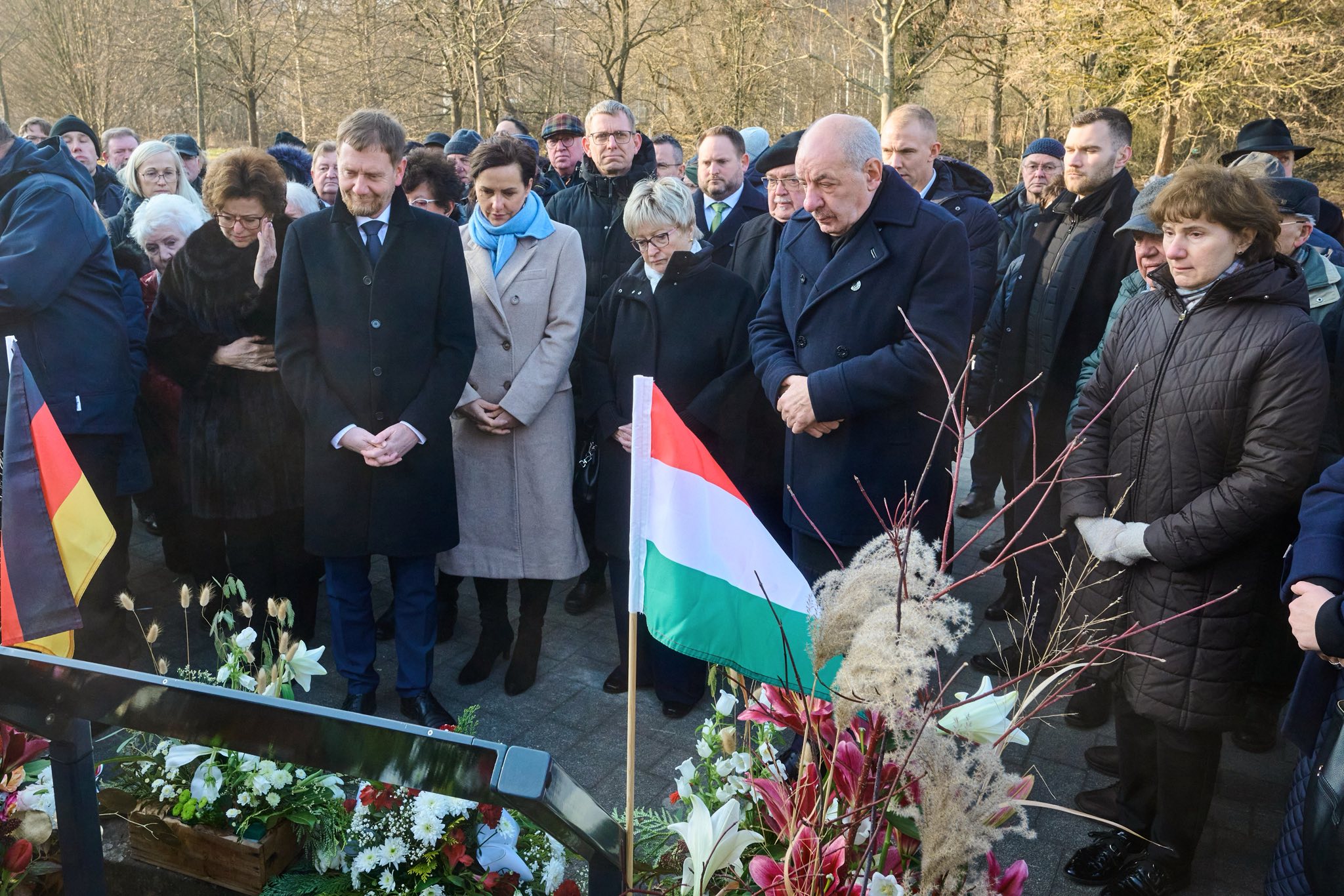
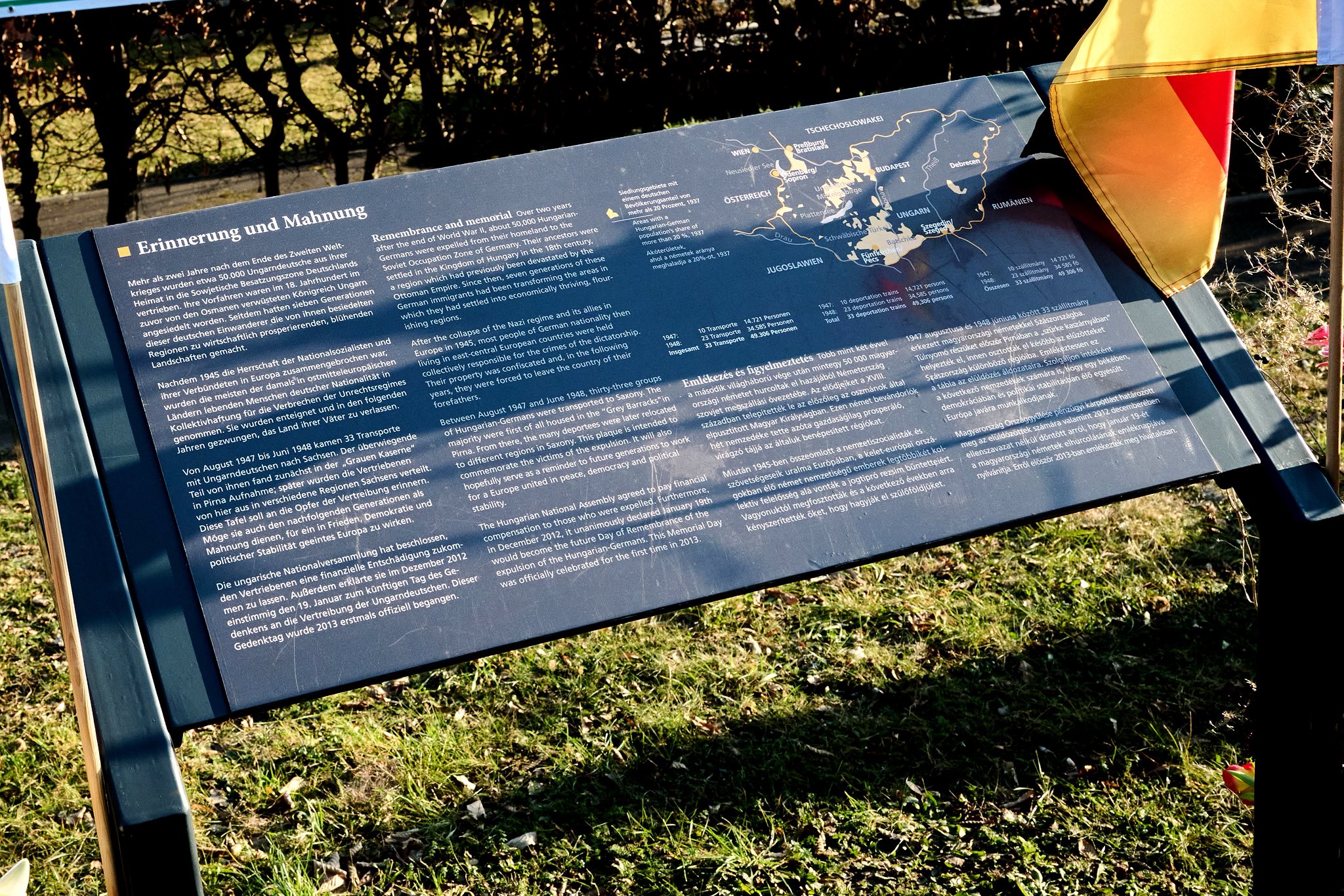
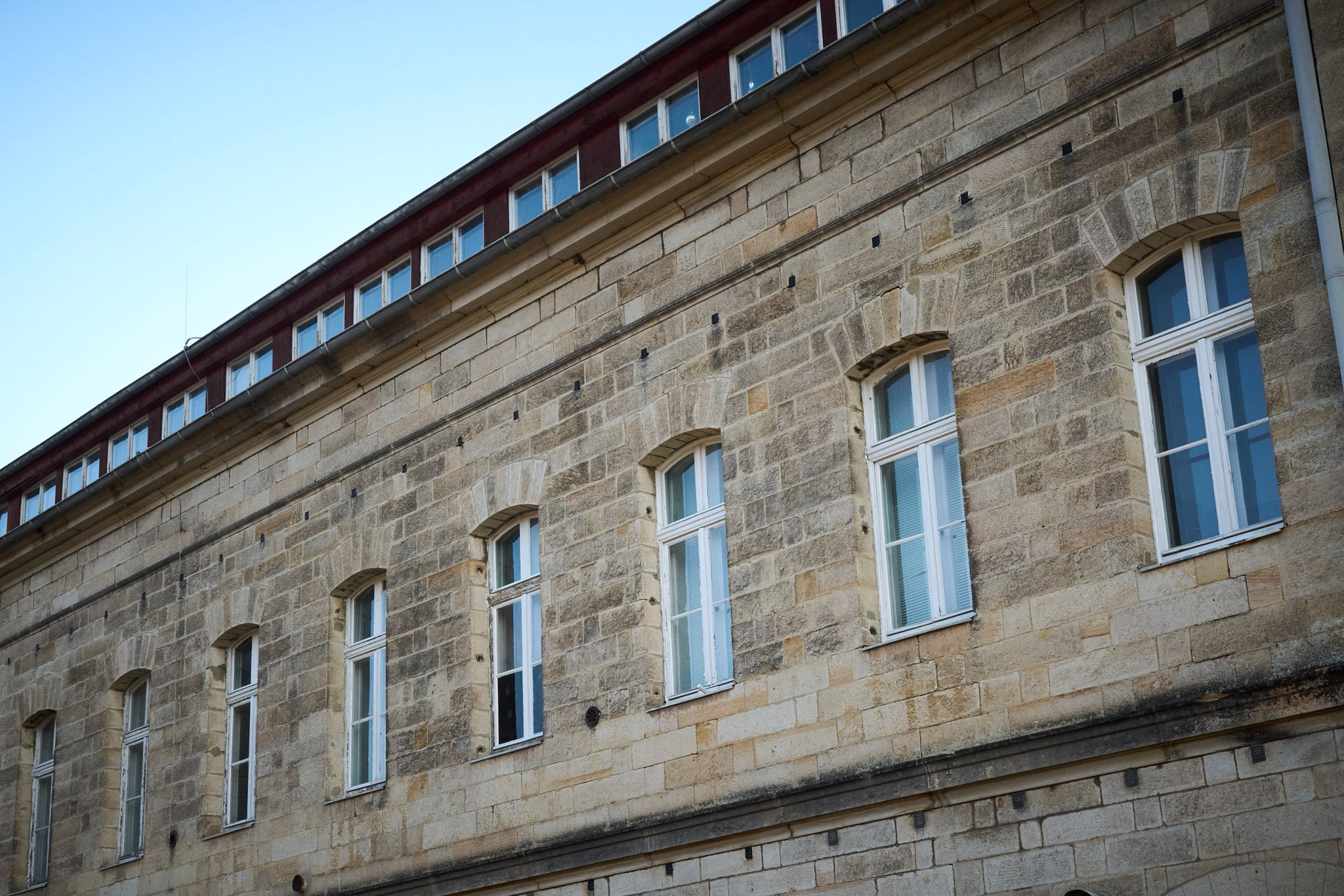
Speech delivered in Pirna by Dr. Tamás Sulyok, President of Hungary, on Memorial Day for Deportation of Ethnic Germans from Hungary
Honourable Prime Minister!
Honourable Assembly!
Dear German Friends!
Eighty years ago, German men, women, and families were expelled from Hungary almost overnight. In three waves, more than 200,000 souls were torn from their homes and from our common homeland. They were my compatriots. They were respected citizens of our country.
German communities had lived alongside Hungarians for centuries. They contributed greatly to the country and to Hungarian culture. Together with them, we built Hungary, which was also their homeland. Those who were expelled eighty years ago were just as much a part of the Hungarian nation and Hungarian culture as any of their fellow citizens. Many families lived, worked, created and built value in Hungary for centuries. Then came the inhumane order: they had to leave.
The expulsion of Germans from Hungary was a shameful, inhumane crime. After the bloody world war, not only were the wounds not healed, but new ones were inflicted. The suffering of the past was followed by new suffering. Among the Hungarian victims of the twentieth century are those Germans who were forced to leave their homeland. This is a huge loss not only for the German nation, but also for the Hungarian nation. We will never forget those who were deported and their descendants. Hungary welcomes back those who decide to return.
Ladies and gentlemen!
A nation that does not know its past has little hope of avoiding its former mistakes. And a nation that refuses to learn from the horrors of its past closes the very door that leads to a safer future.
It took facing up to historical tragedies to enable us to live in a Europe today where we say a firm no to all forms of discrimination, no to the deprivation of rights, no to the persecution of indigenous minorities, and no to collective guilt. Preserving the rights of indigenous nationalities is a European value that should now be taken for granted. The disenfranchisement of national communities runs counter to every principle that holds our European community together. Respect for the rights of nationalities is also a measure of democracy.
Ladies and gentlemen!
History has forged close ties between us, Hungarians and Germans. There are two very strong threads in the bond between us. One has connected Germans and Hungarians for a thousand years. This is the relationship between our two countries, which is reflected in our intensive economic, cultural, political and social ties. The other strong thread is the German nationality in Hungary. Therefore, Hungarians and Germans can never be enemies, for we are connected through shared communities, families, and personal ties. Beyond these strong bonds, we can also rely on the significant Hungarian communities in Germany.
Throughout our history, those who have worked to strengthen our relations and whose activities have served mutual understanding have always been on the right track. Good German-Hungarian relations are valuable in Europe, and I personally stand up for our cooperation.
Ladies and gentlemen!
The German community in Hungary has enriched Hungarian culture and, over the centuries, created something enduring — all while preserving their identity. Their contribution was never founded on self-denial. They did not renounce their roots, nor
did they abandon their culture. They built; they did not destroy. The history of the German community in Hungary stands as a testament to Europe that national cultures — and the efforts to preserve them — have not just a right to exist, but a vital
role to play in our shared future.
I am personally committed to supporting indigenous nationalities. In keeping with tradition, I meet with their leaders each year.
Ladies and gentlemen!
Allow me to conclude my speech by quoting Hungary's first Prime Minister after the change of regime, who maintained a friendly relationship with Chancellor Helmuth Kohl. In one of his speeches, József Antall said the following: "If we lose our memory, we will not belong together, we will not be able to draw strength from the past to overcome the difficulties of the present."
It is our duty to remember and to pass on this attitude to young people. I am delighted to see so many of them here today. Thank you for recognising the importance of honouring the memory of the victims. We can only look clearly to the future if we do not allow the past to be obscured. Only in this way can we learn from the sins of the past, so that neither we nor future generations repeat them.
Thank you for your kind attention.