

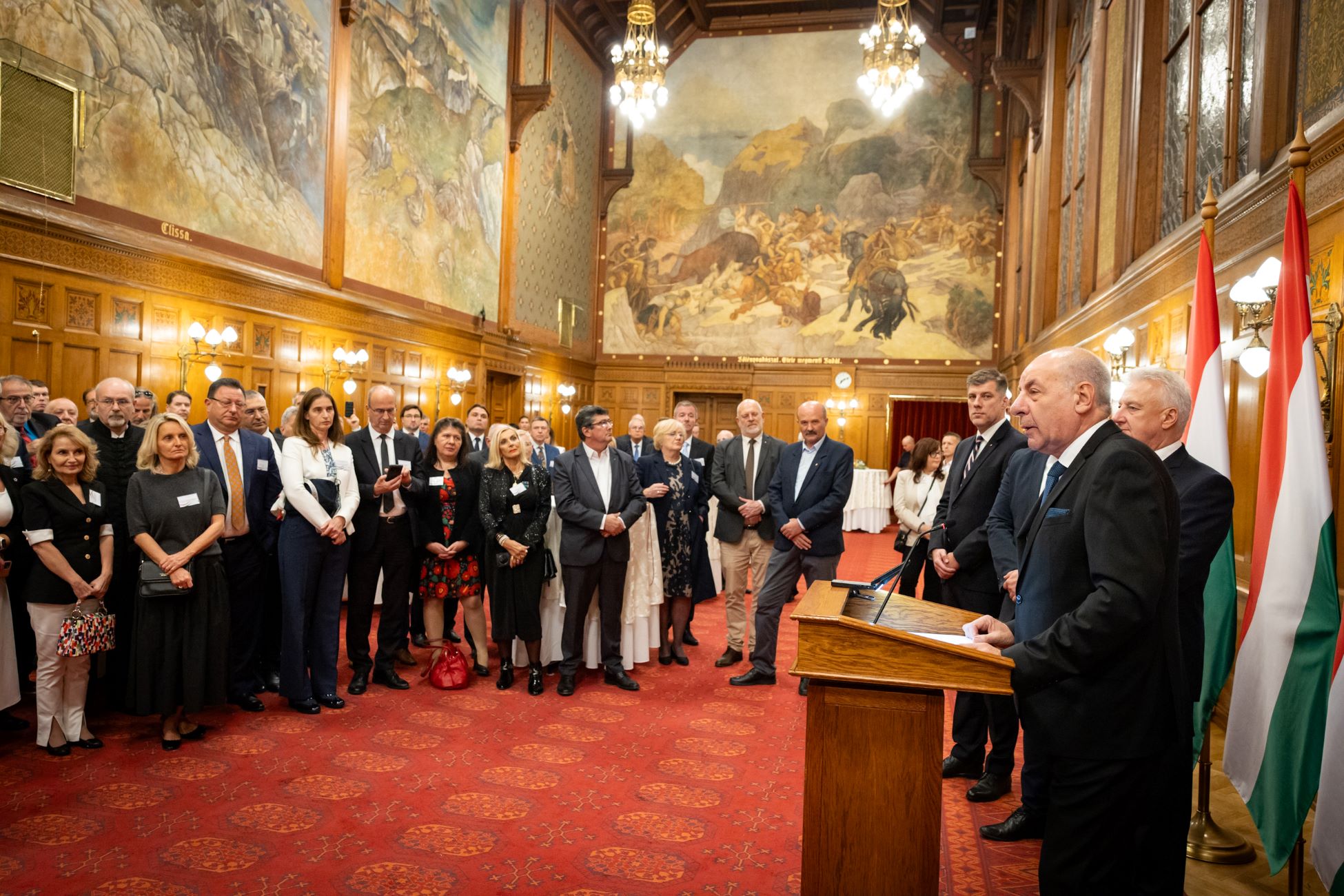
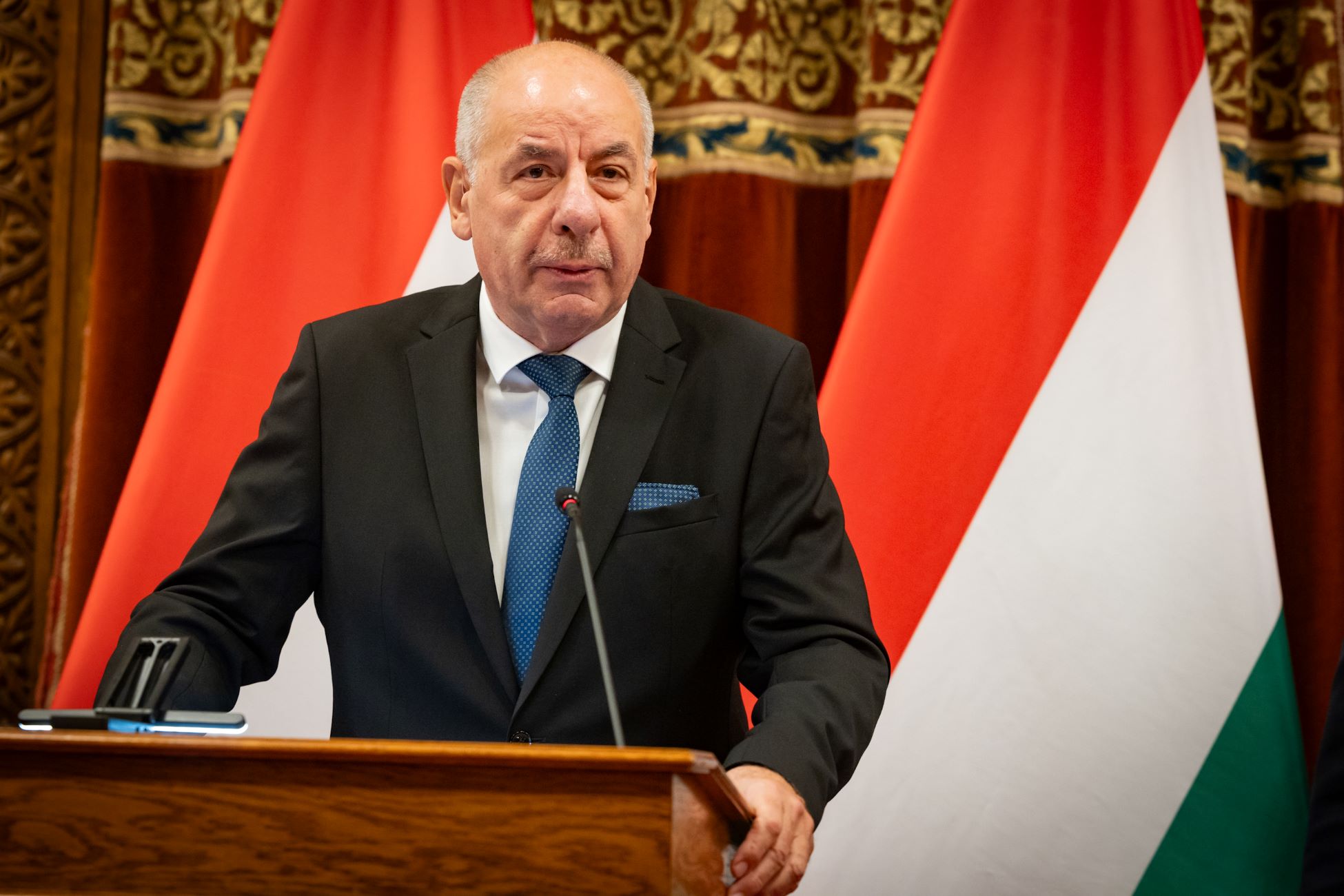
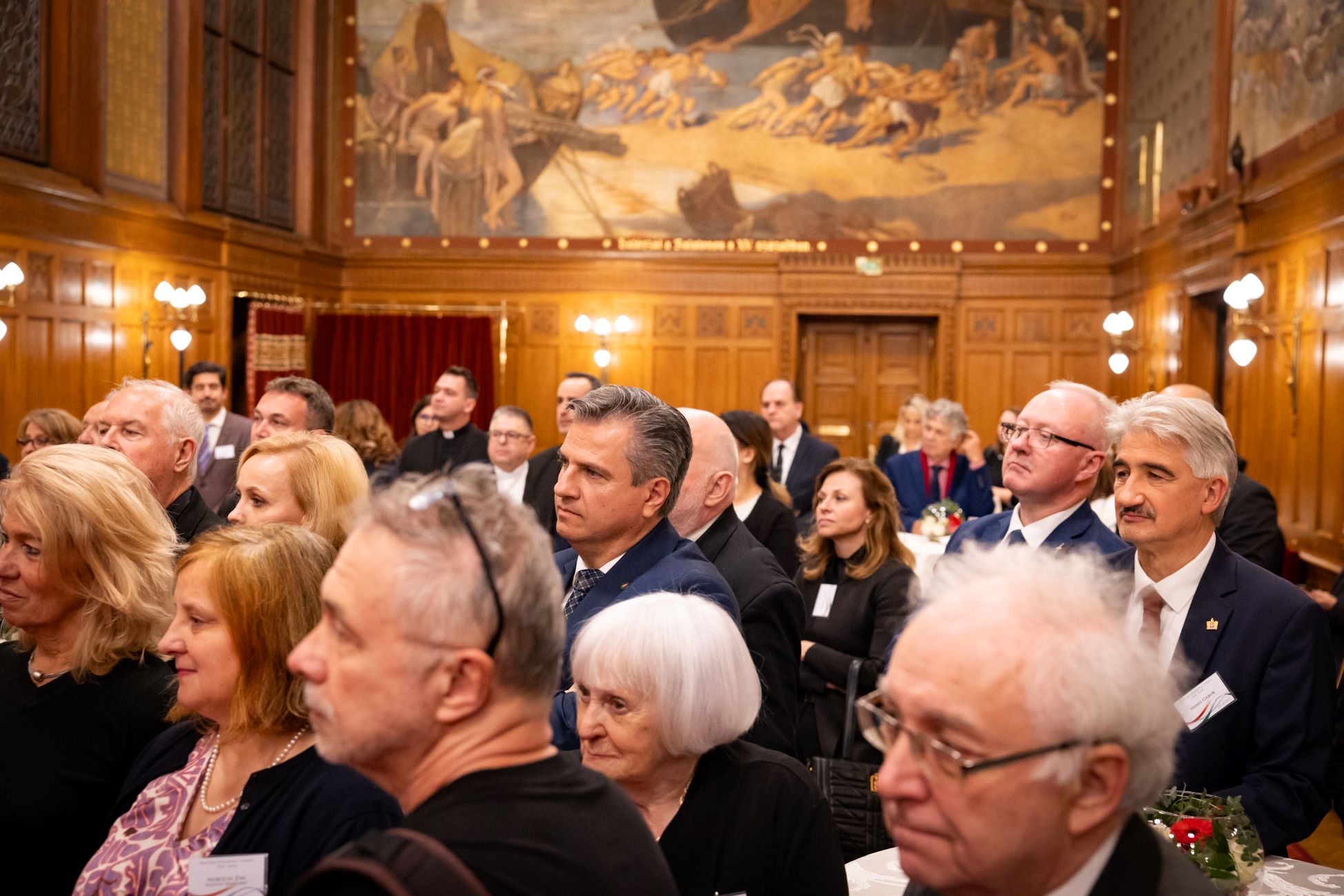
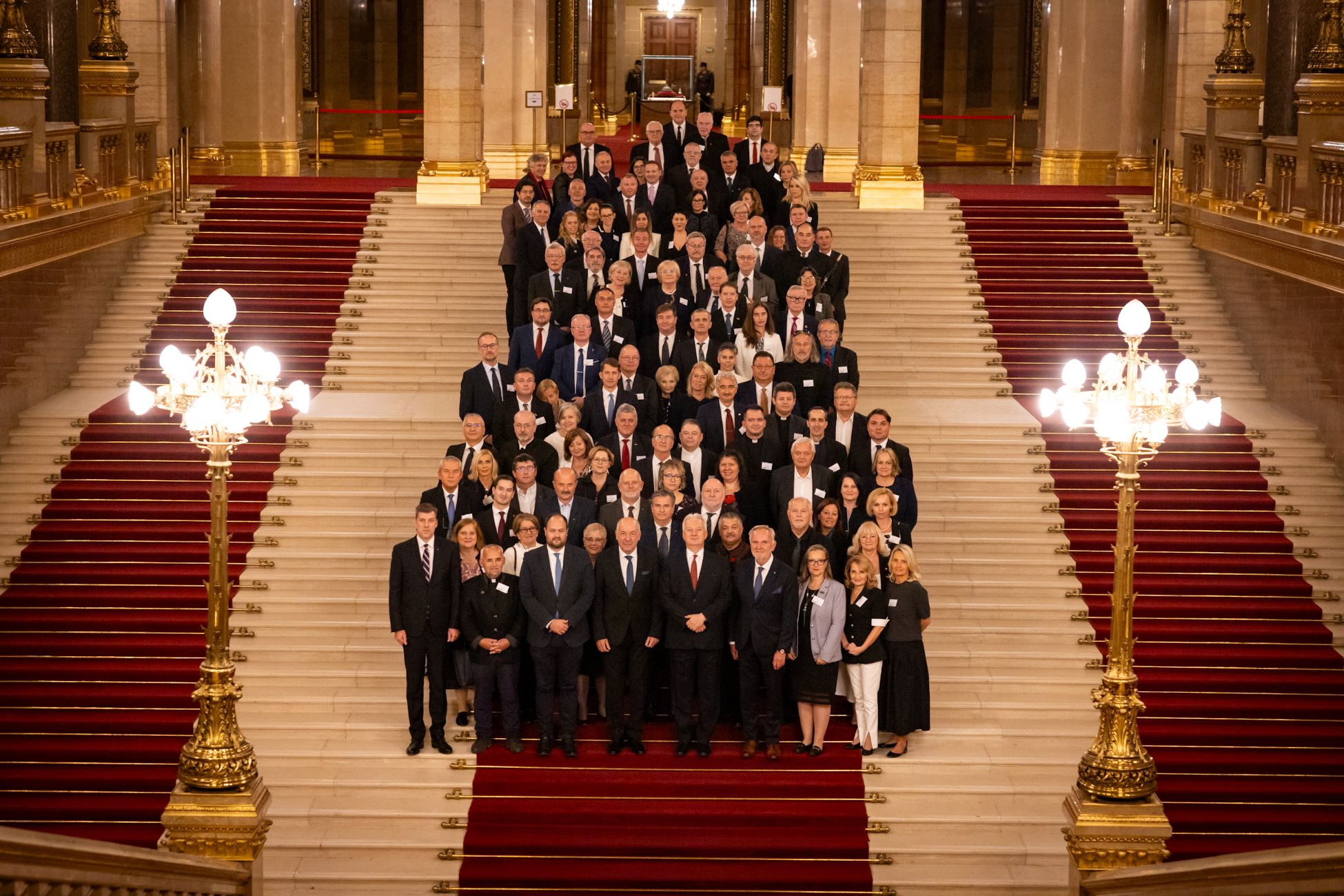
Being Hungarian is a value - a value that sustains – Address by the Head of State at the Opening of the Hungarian Standing Conference (MÁÉRT)
Honourable Chairman of the Committee,
Deputy Prime Minister, State Secretary,
Ladies and Gentlemen,
I warmly and respectfully welcome all participants of the Hungarian Standing Conference and the Diaspora Council.
In the life of a large family, it is always a festive occasion when its members gather together. Such a family reunion gives a sense of completeness. In the life of our nation, this is even more so the case with the Hungarian Standing Conference and the Diaspora Council, when representatives of the Hungarian nation come together from Szeklerland to Pozsony, from Délvidék to Transcarpathia, from the United States to Europe and South America, and even Australia.
I would like to thank the State Secretariat for Nation Policy for organising this event, and I would like to thank you for coming and bringing the thoughts and experiences of your communities to the conference. Thank you for serving with your work and for strengthening the unity of Hungarians worldwide through your presence. Let me congratulate the Democratic Alliance of Hungarians in Romania, which celebrated its 35th anniversary a few days ago, for its service to the largest Hungarian national community abroad.
I myself hold that expressing our unity is a fundamental condition for the existence of the nation. Without unity, there is no nation. It was no coincidence that, after emerging from the prison of communism, Hungary ensured that its Constitution stated at the first opportunity that it “feels responsibility for the fate of Hungarians living beyond its borders.”Then, in 2011, our Fundamental Law further strengthened this by stating that Hungary not only feels but also bears responsibility for the fate of Hungarians living outside its borders. In this way, our handshakes, collaborations, and assistance have become even more concrete and even stronger.
Without this, the Hungarian people would become divided and turn against each other. For those who shut themselves behind national borders and reject their compatriots living in their homeland in the Carpathian Basin and those who have emigrated or been expelled to the diaspora are turning not only against their nation, but also against themselves. Those who profess and live their Hungarian identity are not only loyal to their ancestors and contemporaries, but also to themselves.
Our mother tongue, our culture, and our belonging to the national community are all fundamental to our sense of self. It is good to be Hungarian. Being Hungarian is a value—a value that sustains us.
Ladies and gentlemen!
As lawyers, we often speak of human dignity—and for good reason. But human dignity is deeply connected to the dignity of our nation. It is an uplifting, destiny-shaping heritage that reminds us of our gravest responsibilities while also giving us the joyful reassurance that each of us has a place in the nation, and that we can count on one another.
Our ongoing duty is to nurture and deepen our bonds, both within the nation and with it, and to safeguard and elevate the nation's reputation. Throughout our thousand-year history, there have been many who have provided guidance on this path, from Saint Stephen to István Széchenyi and Ferenc Deák, to Áron Márton and János Esterházy. The magnificent Hungarian Nobel Prize in Literature awarded last week means that in two years, the world-renowned achievements of Hungarians have been recognised with the Nobel Prize three times.
As Head of State, I consider it my priority to express the unity of the nation across borders. I arrived at today's reception from Csallóköz, and tomorrow I will visit Eastern Felvidék again for several days. Over the past year and a half, I have participated in several significant Hungarian events abroad. Last autumn, I was in Zsablya in Southern Bácska for the consecration of the Roman Catholic church, where Hungarians and Serbs celebrated together in peace, overcoming their painful past. I was in Csíksomlyó for the Pilgrimage and in Kolozsvár on Farkas Street for the ordination of Reformed pastor Vilmos Kolumbán as bishop.
I erected a wooden funery pole on Nyerges-tető in memory of the fallen Szekler heroes. In Temesvár, I commemorated the days of the revolution together with the Hungarians of Bánát. I visited the site of the Parajd salt mine disaster. I met with Brother Csaba Böjte and the children entrusted to his care in Déva, greeted the traditionalists at the Hungarian Cultural Days in Kolozsvár, and our Csángó brothers and sisters in the beautiful valley of Gyimes. I remembered the Fourth of June together with Swiss Hungarians, met with representatives of the Hungarian community in Austria in Vienna, and greeted the Hungarians in Belgium in Brussels.
Tomorrow evening at this time, the Hungarians of Bodrogköz await me in Bors, in the reimagined castle of Ferenc Rákóczi II.
A community lives only if its members meet, engage in discourse and pay attention to each other. The Hungarian Standing Conference and the Diaspora Council are our largest all-Hungarian consultative forums. The questions to be answered and the tasks to be solved are often complex and require extraordinary strength.
We must face the fact that among the members of our Hungarian communities, there are those who are suffering from war, economic crisis, demographic decline, or even intellectual and ideological struggles. Often we cannot see the solution, but it is clear that these difficulties can be alleviated through joint efforts.
I would like to emphasise that Hungary stands by the Hungarian community in Transcarpathia, which has been experiencing the extreme difficulties of war for a long time.
I would like to thank every Hungarian community and every Hungarian who have been providing support to our compatriots living in Transcarpathia. The steadfastness and spiritual strength of the Hungarian community in Transcarpathia is exemplary. May they now find strength in the fact that, even in these most difficult of times, a goal set decades ago has been finally achieved, with the Rákóczi Ferenc II. College in Beregszász being awarded university status a few days ago, after years of hard work. This gives new hope to prospective Hungarian students in Transcarpathia, in this "Year of Future Generations".
I wish the students continued success and good health in their work, a prosperous future for their Hungarian communities, and every success for tomorrow’s meeting.
Oh God, bless the Hungarians!